The Antwerp Milestone: A New Era for CMT Research
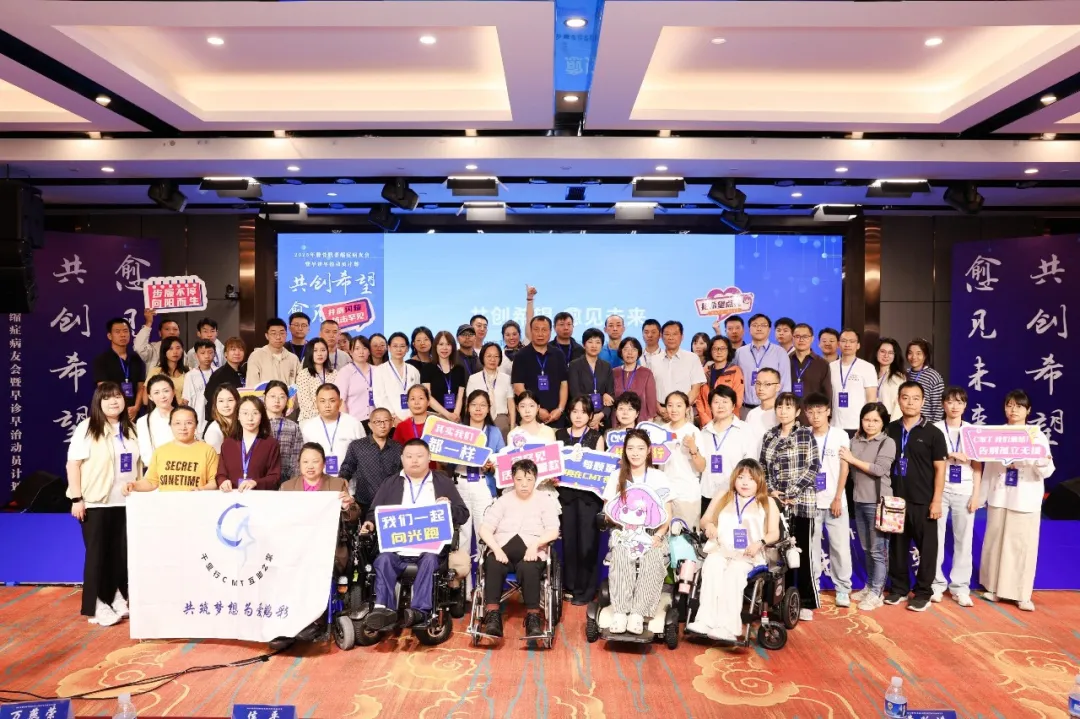
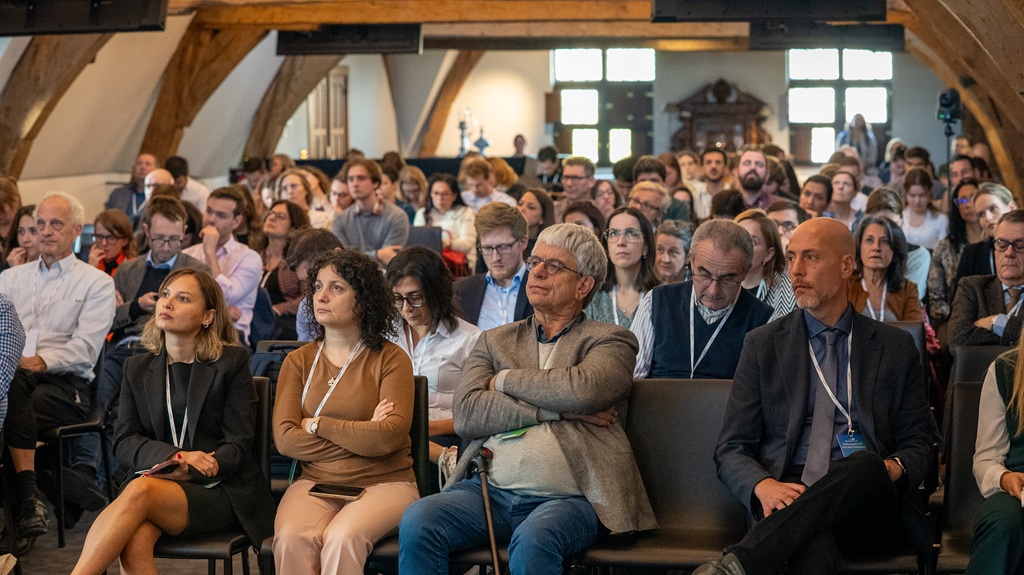
The 2nd European CMT Specialists Conference, convened in Antwerp from October 23–25, 2025, marks a definitive turning point in the global effort to resolve the complexities of Charcot-Marie-Tooth disease. Following the foundational meeting in Paris in 2023, this summit served as the formal mechanism for institutionalizing European cooperation and establishing a unified strategic front. By bringing together 136 delegates from four continents—Europe, North and South America, and Asia—the conference transitioned from a scientific exchange to a high-impact forum for cross-border research governance and clinical harmonization.
This milestone effectively operationalized the “Patients as Partners” philosophy, a paradigm shift that moved the community from passive clinical observation to a model of patient-driven research. Through the collaborative efforts of the European CMT Federation (ECMTF) and the newly established European CMT Research Association (ECRA), patients are no longer merely the subjects of study but central stakeholders driving the scientific agenda. This shift ensures that the translational pipeline is directly responsive to the lived experiences of the CMT community, moving us closer to actionable cures. The atmosphere of intense cooperation in Antwerp has already yielded a suite of tangible, high-value deliverables that will define our roadmap for years to come.
Concrete Outcomes: The Founding of ECRA and the Multi-Stakeholder “Dance”
A cornerstone outcome of the conference was the formalization of the European CMT Research Association (ECRA). In a post-Brexit landscape where research networks have faced significant fragmentation—most notably the sudden exclusion of UK leadership from European Reference Networks (ERNs)—ECRA was established as a strategic necessity. As a non-political and geographically inclusive European body, ECRA ensures research continuity and the free flow of data across the entire continent, regardless of political shifts. By providing a stable, formal structure, ECRA preserves the integrity of European scientific collaboration and accelerates the path to therapeutic discovery.
To describe this cooperative model, the conference embraced the metaphor of the “Four Dancers.” A successful path to a cure requires the synchronized movement of four critical stakeholders: Patients, Clinicians, Researchers, and Politics/Society. This fourth dancer—Politics and Society—is essential for driving the awareness and advocacy required to integrate scientific breakthroughs into global healthcare systems. By harmonizing these four groups, the CMT community can overcome traditional silos, turning individual research projects into a synergistic movement toward a collective cure.
The stewardship of this vision has been entrusted to Prof. Vincent Timmerman, the incoming ECRA President and a pioneer who discovered the first CMT gene (CMT1A). Alongside the new board, Prof. Timmerman’s mission is to deliver on the mandates set by the ECMTF: treating the quest for a “cure” as a multifaceted responsibility that spans from improved daily management to definitive disease-modifying interventions. This structural evolution has immediately translated into specific, documented deliverables designed to standardize care and research excellence.
The Deliverable Showcase: Tools for Research, Clinical Trial Readiness, and Care
The success of the Antwerp conference is quantified by its static deliverables—documented standards and reports designed to harmonize CMT management across Europe and bridge the gap between innovation and clinical application.
- Deliverable D.3.2: AI in CMT – Current State and Strategic Recommendations
- Summary: This report delineates the role of machine learning and AI in CMT, highlighting applications in neurophysiology (Random Forests for subtype classification), genetic variant prediction (MAVERICK and GENESIS), and outcome measures (Musclesense for automated MRI analysis). It distinguishes between classical models and generative AI, noting that while deep learning shows immense promise, it requires 100–1000x more data than current single-center studies provide.
- Strategic Impact: AI-driven “precision electrodiagnostics” can bridge the gap for general neurologists, reducing assessment subjectivity. To solve the “generalization problem,” the report prioritizes the assembly of large, multi-center benchmarking datasets to ensure models perform accurately across different laboratories.
- Link: [Download D.3.2 – AI in Diagnostics]
- Deliverable D.4.1: Towards Rehabilitation Guidance for Adults with CMT
- Summary: Addressing the care gap for adults, this deliverable outlines a three-stage approach combining evidence synthesis, patient engagement, and expert consensus. It highlights evidence-based recommendations, such as progressive resistance exercise specifically targeting ankle dorsiflexors.
- Strategic Impact: These guidelines empower patients through self-management while reducing the financial burden on healthcare systems. Demonstrating immediate progress, pediatric guidelines are already being translated into Italian and German in cooperation with ECMTF to ensure European-wide scaling.
- Link: [Download D.4.1 – Rehabilitation Guidance]
- Deliverable D.4.2: Towards a Cure – Therapeutic Strategies under Development
- Summary: A comprehensive landscape of current therapies, focusing on gene-based approaches—ASOs, siRNA, and viral vectors—designed to modulate PMP22 dosage. It also reviews pharmacological interventions, such as selective HDAC6 inhibitors (e.g., QTX153) that show potential in restoring axonal transport and ameliorating disease phenotypes.
- Strategic Impact: This deliverable marks the critical transition from symptomatic management to disease-modifying therapies, providing a state-of-the-art framework for industry investment and regulatory engagement.
- Link: [Download D.4.2 – Towards a Cure]
- Deliverable D.5.1: Outcome Measures for CMT and Neuromuscular Disorders
- Summary: This report validates a portfolio of clinical (CMTNSv2, CMT-FOM, CMT-HI) and paraclinical (qMRI, NfL biomarkers) tools. It introduces the “DANCER” study, which utilizes deep-learning powered computer vision for the assessment of gait and natural motion.
- Strategic Impact: A robust portfolio of measures is the essential prerequisite for EMA regulatory approval. By establishing a Global Certification Standard for clinical evaluators, the community is actively reducing “rater variability,” a major hurdle for industry partners seeking reliable trial data.
- Link: [Download D.5.1 – Outcome Measures Overview]
- Deliverable D.1.7: Conference Evaluation and Multi-Stakeholder Impact
- Summary: Feedback from 136 delegates underscores the “vibrant multi-stakeholder conversation” and the high level of engagement from early-career researchers and patient organizations.
- Strategic Impact: This report confirms the global reach and “AI-readiness” of the CMT community, demonstrating that the foundation for international, data-driven cooperation is firmly established.
- Link: [Download D.1.7 – Evaluation Report]
These documents represent the static foundation upon which the Federation’s dynamic, ongoing roadmap is built.
Roadmap for the Future: Short, Medium, and Long-Term Ambitions
To sustain the momentum of the Antwerp Milestone, ECRA has established a tiered strategic roadmap to guide the consortium’s activities through the next decade:
- Short-Term: Visibility and Infrastructure
- Launch a centralized website as a repository for papers, references, and clinical guidance for all stakeholders.
- Enhance engagement via ECMTF social media channels.
- Ensure high-level visibility at major international congresses, specifically the Peripheral Nerve Society (PNS) annual meetings.
- Medium-Term: Innovation and Standardization
- Develop joint innovative projects and prototypes for digital care and telemedicine.
- Operationalize standardized international patient registries to facilitate trial recruitment.
- Roll out global certification programs for clinical evaluators to ensure data reliability in multicenter trials.
- Long-Term: Transformation and Scalable Cures
- Fully integrate AI applications to simplify diagnosis and refine treatment guidelines.
- Build interoperable databases compliant with the European Health Data Space (EHDS) to ensure seamless health data management.
- Identify a definitive cure for at least one CMT phenotype to serve as a biological and regulatory catalyst for the entire field.
The complexity of these objectives underscores the absolute urgency of continued, borderless international cooperation.
Final Call to Action: Stay Involved
The Antwerp Conference was not the conclusion of our work, but a catalyst for the next phase of our mission. To ensure these strategies translate into clinical reality, we invite all stakeholders to maintain their active engagement with the Consortium.
For those seeking deeper scientific insights, the full video playlist of conference presentations and interviews is available on the ECMTF YouTube channel.
We move forward with the spirit of Antwerp and our defining motto: “Together we are stronger.” By uniting across borders and disciplines, we will turn these concrete outcomes into a reality for every person living with CMT.
Download the Conference Deliverables
Scientific & Strategic Frameworks
1. Medical Training Program: Recommendations & Online Seminars (D.2.1 & D.2.2) To combat the unacceptable 10-year average “diagnostic odyssey” for CMT patients, this document provides recommendations to integrate inherited neuromuscular diseases into medical school curricula and outlines a targeted online seminar program for healthcare professionals. [Download PDF]
2. Data Sharing Framework Outline (D.3.1) A GDPR and European Health Data Space (EHDS)-compliant strategy aimed at breaking down siloed patient registries. It focuses on empowering “patient ownership” while granting researchers the critical access to genotypes and clinical phenotypes needed to power modern research. [Download PDF]
3. AI in CMT (D.3.2) An overview of how Artificial Intelligence and deep-learning methods can be leveraged to address unmet needs in CMT, from machine-learning assisted neurophysiology to automated clinical outcome assessments like quantifying muscle fat fraction on MRIs. [Download PDF]
4. Model Multistakeholder Joint Project: CureCMT (D.3.3 & D.4.3) A blueprint of the CureCMT Doctoral Training Network. This model project unites 15 leading scientists, 3 patient organizations, and 3 industry partners to train the next generation of experts, advance gene therapies for rare CMT subtypes, and establish trial readiness. [Download PDF]
5. Towards Rehabilitation Guidance for Adults (D.4.1) While pediatric guidelines exist, there is a profound lack of evidence-based guidance for adults. This deliverable outlines a three-stage approach to developing international, consensus-based rehabilitation and physical management guidelines for adults living with CMT. [Download PDF]
6. Towards a Cure for CMT: Therapeutic Approaches (D.4.2) A critical overview of the current therapeutic landscape. It summarizes the most promising pharmacological and gene-therapy strategies currently in development and provides a comprehensive list of running and planned clinical trials for various CMT subtypes. [Download PDF]
7. Outcome Measures for CMT – Overview (D.5.1) A detailed compilation of the clinical outcome assessments (COAs), patient-reported outcome measures (PROMs), and paraclinical biomarkers (such as quantitative MRI and blood biomarkers) that are crucial for demonstrating drug efficacy to regulatory agencies. [Download PDF]
8. Standardization of Clinical Outcome Assessments (D.5.2) This report discusses the chances, limitations, and strategies for standardizing outcome assessments. It emphasizes the need to reduce inter-rater variability and combine clinical scores with imaging and biomarkers to ensure robust, objective tracking of disease progression. [Download PDF]
9. Digital Care Strategy Outline (D.6.1) A framework exploring how telemedicine and digital health apps can bridge geographical gaps, connect remote patients with CMT specialists, and systematically collect natural history data while addressing the challenges of cross-border care. [Download PDF]
10. Cooperative R&D: “Patients as Partners” (D.6.2) The guiding philosophy of our federation. This document details how patients must transition from being passive beneficiaries of care to active co-drivers of research, outlining strategies to mobilize the community for clinical trials and data sharing. [Download PDF]
Organizational & Impact Reports
11. Project Leaflet (D.1.3) A comprehensive summary brochure outlining the conference’s objectives, the program, the introduction of the new ECRA board, and the “Seven Steps Towards a Cure on CMT”. [Download PDF]
12. Event Report (D.1.4) A detailed and extensive report documenting the entire conference. It covers the strategic objectives, the preparatory phase, detailed summaries of all plenary sessions and idea workshops, the awards ceremony, and the final conclusions outlining the way ahead for ECRA. [Download PDF]
13. Dissemination Report (D.1.6) An in-depth analysis of the communication strategy used to promote the conference. It includes social media performance metrics, sentiment analysis, and documentation of how the event successfully complied with the EU4Health visibility requirements, reaching thousands globally. [Download PDF]
14. Evaluation Report (D.1.7) The official assessment based on the post-conference feedback survey from the delegates. It provides statistical data and open comments proving the overwhelming success of the collaborative “patients as partners” format, with attendees praising the networking opportunities and high scientific quality. [Download PDF]
These deliverables represent a roadmap for the future. The implementation of these decisions is now entrusted to ECRA. We thank all the delegates, speakers, and sponsors—including the generous co-funding from the European Union’s EU4Health program—who made this work possible. We call on the entire CMT community to join us in putting these ideas into practice.
Together we are stronger!